Nuts
1 . Targeting Nut Consumption
Nuts, such as walnuts, almonds and hazelnuts, are considered healthy and nutrient-rich foods. Their popularity continues to grow, driven by the increasing consumption of vegetarian and vegan products as protein alternatives to meat.
2 . What are the microbiological risks?
Microorganisms, including bacteria (salmonella, E. coli), molds, and yeasts, can contaminate improperly stored nuts, leading to microbiological infections. The risk of infection increases when storage conditions promote microbial growth, such as high temperatures, high relative humidity, and inadequate ventilation.
3 . What treatment is used?
To treat nuts contaminated with harmful microorganisms and prevent microbiological contamination, saturated steam pasteurization under vacuum can be used. This process involves applying heat at specific temperatures for a set duration to destroy microorganisms present in nuts. Treatment temperatures and durations vary depending on the type and level of contamination of the nuts, but generally range between 85 and 115°C for several minutes.
It is recommended to consult an expert to determine the optimal pasteurization treatment for specific contaminated nuts.
Nut Varieties Treated by Steripure
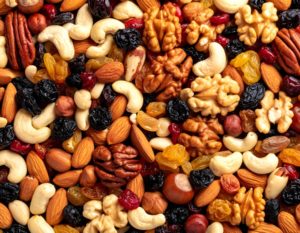
Almonds - pistachios - kola nuts - cashews - walnuts - mixed dried fruit and raisins - pecans - brazil nuts - macadamia nuts - hazelnuts - pine nuts - mixed nuts
Is your product not listed?
Test my productThe Benefits of Pasteurization for Nuts
A customer/partner, contacted by their customers, reported that “the almonds I import are often too soft.” As part of our continuous improvement process, our R&D team has developed a new recipe that not only pasteurizes but also adds crispness and crunch to the product.
Our technology offers several advantages:
- Reduced microbial load
- Preserves product crispness
- Elimination of insects
- Consistent treatment across all batches
Based on these encouraging results, Steripure has decided to offer this process for all nuts.
Nut and dried fruit mixes
It is also possible to treat nut and dried fruit mixes.
Our R&D team is available to assess your formulations and support your project.